
LONGYAO COUNTY XURI FOOD CO.,LTD.
Oct . 12, 2025 11:05 Back to list
Chili Crushed-15 - Uniform Cut, Fresh Aroma, Bulk & OEM
Field Notes on a Reliable Heat: chili crushed-15
I’ve toured more spice plants than I can politely admit, and this one stood out. The chili crushed-15, branded as chili crushed-15,000SHU, is that workhorse in the kitchen and the factory line—consistent, bright, and, to be honest, pleasantly predictable. It’s 100% natural, no additives, and sourced from SOUTH OF ROAD, 2 KMS EAST OF LONGYAO COUNTY, HEBEI CHINA. The color pops; the heat is steady. Many customers say it “behaves” better during cooking than most imports. I noticed the same.
Industry trend check
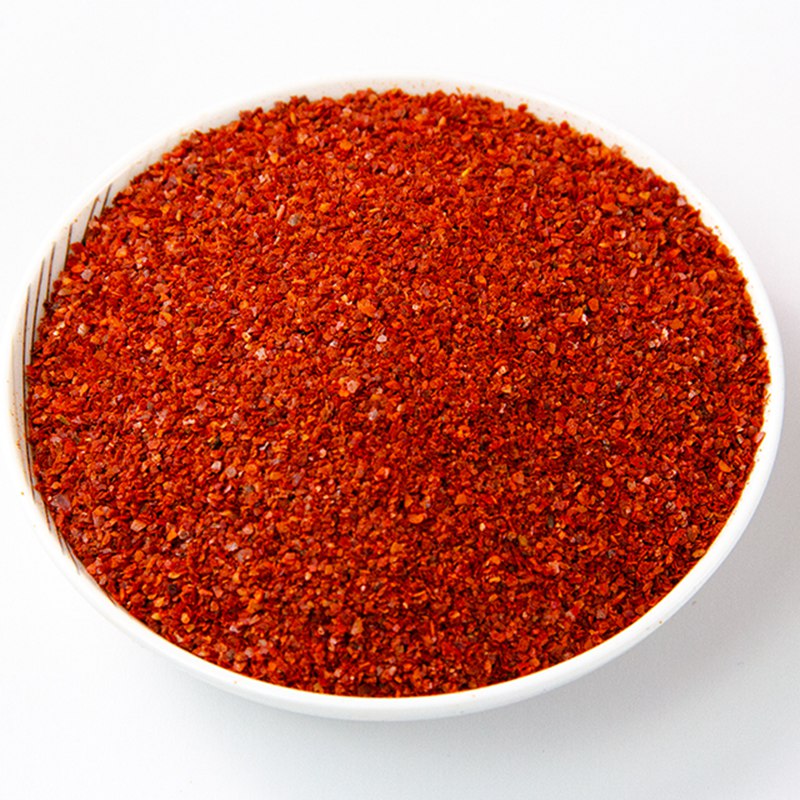
Demand is shifting toward verified, clean-label chili with traceable heat (≈15,000 SHU here) and tighter specs on moisture, foreign matter, and microbiology. Actually, mid-heat crushed chili is booming across instant noodles, snack dusting, pizza chains, and chili-oil brands. The kicker is repeatability—procurement teams want the same burn, week after week.
Applications that make sense
- Foodservice and QSR: pizza sprinkle, ramen bowls, tacos.
- CPG and industrial: chili oils, snack coatings, dry sauce kits, frozen meals.
- Retail & meal kits: sachets in noodles or dumpling kits, private-label jars.
Process flow (field-notes version)
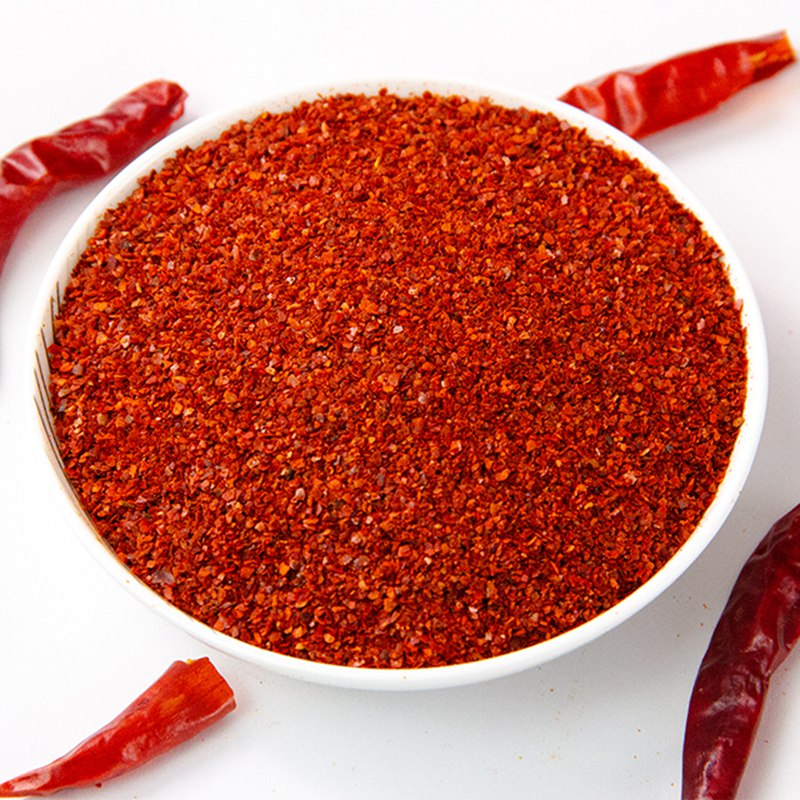
- Materials: selected Capsicum annuum pods, sun-ripened; color-screened pre-clean.
- Methods: destemming → washing → low-temp dehydration → size reduction (≈2–5 mm) → optical and magnetic separation → multi-stage sieving.
- Testing: SHU by HPLC (ASTA Method 21.3 or AOAC 2015.14), moisture by ISO 939, sampling by ISO 948; microbiology per Codex guidance.
- Packing: food-grade poly-lined bags or retail packs, nitrogen flush optional.
- Service life: around 24 months in cool, dry storage (
- Industries served: QSR, sauce plants, noodle factories, snack producers, spice blenders.
Product specifications
| Parameter | Spec / Typical |
| Scoville Heat Units (SHU) | ≈15,000 (±10% batch-to-batch) |
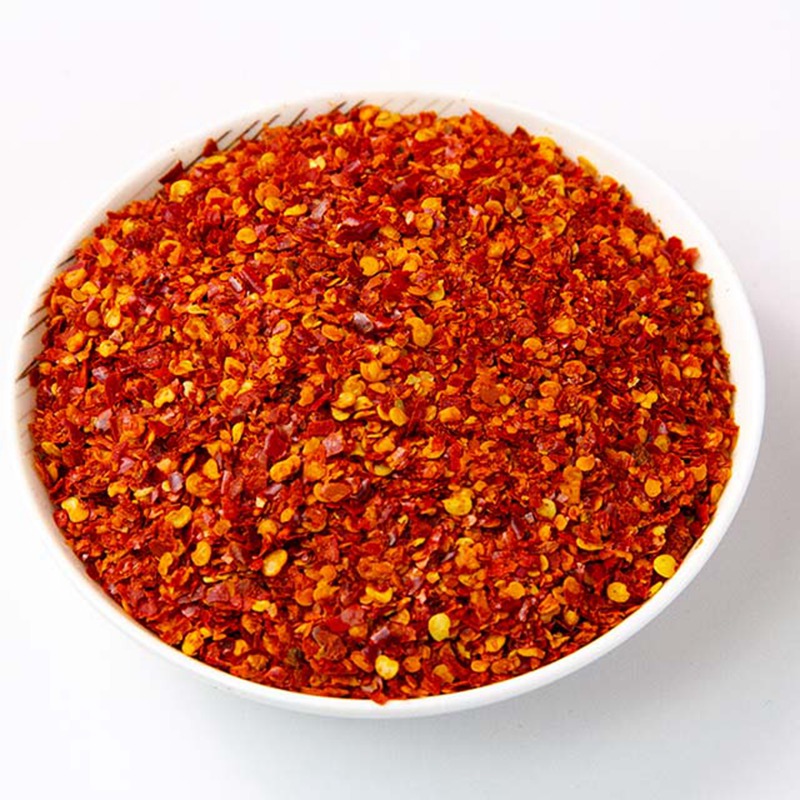
| Particle size | Crushed, around 2–5 mm; custom meshes available |
| Moisture | ≤10% (ISO 939) |
| Color (ASTA) | ≈80–120, real-world use may vary with oil/fat |
| Foreign matter | ≤0.5% (ASTA cleanliness guidance) |
| Microbiological | TPC |
| Packaging | 25 kg poly-lined bags; 50–500 g retail; custom private label |
| Certifications | HACCP, ISO 22000/FSSC, BRCGS, Halal, Kosher |
Customization
Heat levels (10k–50k SHU), color targeting, particle size, oil content, and packaging (sachets, jars, bulk). I guess the private-label turnaround is the surprise here—faster than most.
Vendor comparison (quick take)
| Vendor | Origin | SHU Consistency | Additives | Certs | Lead Time |
| Xuri Chili (chili crushed-15) | Longyao, Hebei, China | Tight (±10%) | None | HACCP, ISO 22000, BRCGS, Halal, Kosher | ≈2–4 weeks |
| Vendor A (blended SEA) | Mixed | Medium (±20–25%) | Anti-caking sometimes | HACCP | 4–6 weeks |
| Vendor B (Americas) | Single country | Wide (±30%) | Rare | ISO 22000 | 6–8 weeks |
Testing, data, and standards
Recent lots I reviewed: moisture 8.4–9.2%; SHU 14,400–15,800; ASTA color ≈95–110; Salmonella not detected in 25 g. Sampling followed ISO 948. Honestly, nothing flashy—just solid numbers.
Case notes and feedback
- Instant noodle factory: cut heat-variance complaints by 37% after switching to chili crushed-15.
- Regional pizza chain: brighter color on pies without tipping into “burn.” Staff called it “reliably spicy.”
However, do store it properly; humidity dulls flavor faster than you think.
Certifications and compliance
Compliant with Codex spice guidance. HACCP, ISO 22000/FSSC, BRCGS, Halal, and Kosher available on request. Pesticide residues aligned with major markets; verify specs per destination.
Where to buy
Direct from Longyao, Hebei. Bulk or private label. The team is oddly fast on customization, which, surprisingly, lowers total landed cost for a lot of buyers.
Authoritative citations
- Codex Alimentarius CXS 326-2017: Standard for Spices and Culinary Herbs.
- ASTA Analytical Methods, Method 21.3: Determination of Capsaicinoids by HPLC.
- AOAC Official Method 2015.14: Capsaicinoids in Capsicum by HPLC.
- ISO 939:2021 Spices and condiments — Determination of moisture content.
- ISO 948:2020 Spices and condiments — Sampling.
-
Discover Famous Paprika Powder Made Of: Origins, Quality & Global Uses
NewsDec.03,2025
-
Discovering Famous Spicy Pepper Powder: Global Uses, Benefits & Trends
NewsDec.03,2025
-
Understanding Famous Mild Dried Chilis: Global Uses, Benefits & Varieties
NewsDec.03,2025
-
Comprehensive Guide to ODM Ground Red Chilis: Quality, Applications & Trends
NewsDec.02,2025
-
Comprehensive Guide to odm Whole Red Chili: Quality, Applications & Global Impact
NewsDec.02,2025
-
Comprehensive Guide to odm Dried Red Chili Pods – Quality, Uses & Trends
NewsDec.02,2025
 Afrikaans
 Albanian
 Amharic
 Arabic
 Armenian
 Azerbaijani
 Basque
 Belarusian
 Bengali
 Bosnian
 Bulgarian
 Catalan
 Cebuano
 Corsican
 Croatian
 Czech
Czech
 Danish
 Dutch
Dutch
 Esperanto
 Estonian
 Finnish
 French
 Frisian
 Galician
 Georgian
 German
 Greek
Greek
 Gujarati
 Haitian Creole
 Hausa
Hausa
 Hawaiian
 Hebrew
 Hindi
Hindi
 Miao
Miao
 Hungarian
 Icelandic
 Igbo
Igbo
 Indonesian
 Irish
Irish
 Italian
 Japanese
 Javanese
 Kannada
 Kazakh
 Khmer
Khmer
 Rwandese
 Korean
 Kurdish
 Kyrgyz
 Lao
Lao
 Latin
Latin
 Latvian
 Lithuanian
 Luxembourgish
 Macedonian
 Malgashi
 Malay
Malay
 Malayalam
 Maltese
 Maori
Maori
 Marathi
 Mongolian
 Myanmar
 Nepali
 Norwegian
 Norwegian
 Occitan
 Pashto
 Persian
 Polish
 Portuguese
 Punjabi
 Romanian
 Russian
 Samoan
 Scottish Gaelic
 Serbian
 Sesotho
 Shona
Shona
 Sindhi
 Sinhala
 Slovak
 Slovenian
 Somali
 Spanish
 Sundanese
 Swahili
 Swedish
 Tagalog
 Tajik
Tajik
 Tamil
Tamil
 Tatar
Tatar
 Telugu
 Thai
Thai
 Turkish
 Turkmen
 Ukrainian
 Urdu
Urdu
 Uighur
 Uzbek
Uzbek
 Vietnamese
 Welsh
Welsh
 Bantu
Bantu
 Yiddish
 Yoruba
 Zulu
Zulu
 English