
LONGYAO COUNTY XURI FOOD CO.,LTD.

Oct . 20, 2025 12:10 Back to list
Ghost Chili Pods2: Extra-Hot Whole Pods—Worth the Heat?
Insider’s Guide to Ghost Chili Pods2: specs, sourcing, and real-world performance
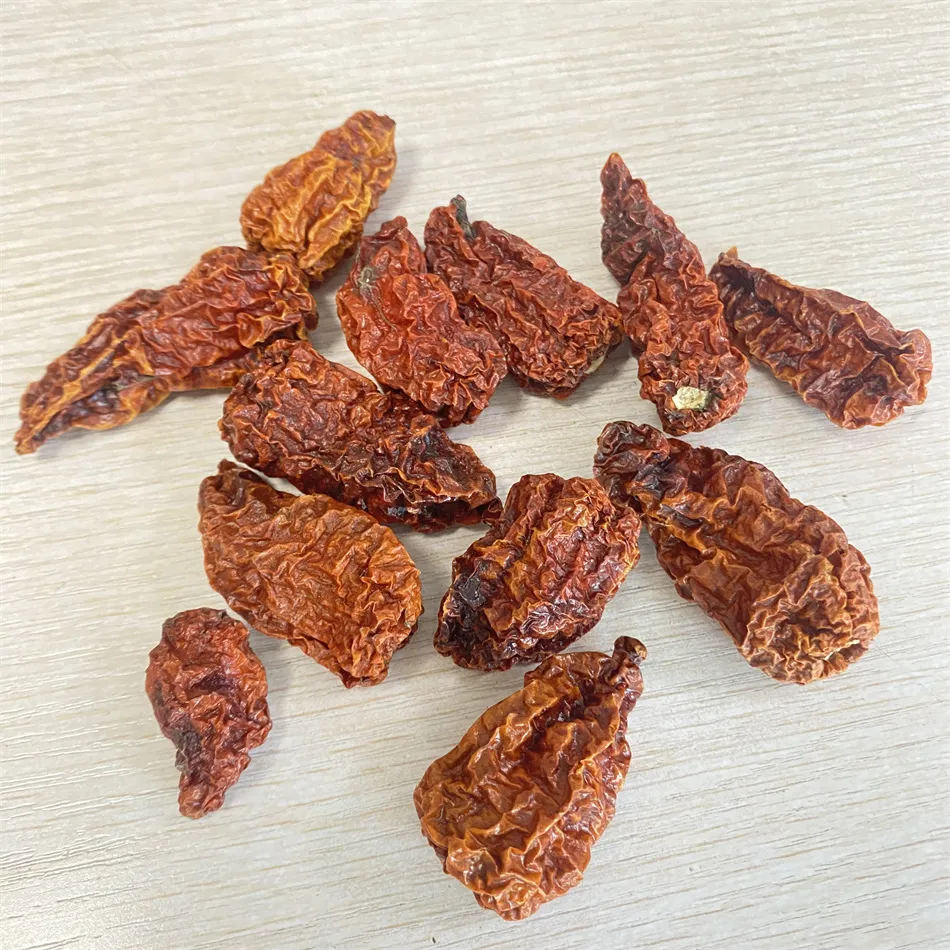
If you work in hot sauce, spice blends, or even R&D for capsaicin extracts, you’ve probably noticed the steady shift toward traceable, consistently hot ghost chili. To be honest, the days of “mystery heat” are fading; buyers want repeatable Scoville performance and clean micro. That’s where Ghost Chili Pods2 has been getting attention—grown in Yunnan, processed in Hebei, and positioned for the U.S./EU market with a stated ~600,000 SHU target. Small pods, wrinkly skin, big punch.
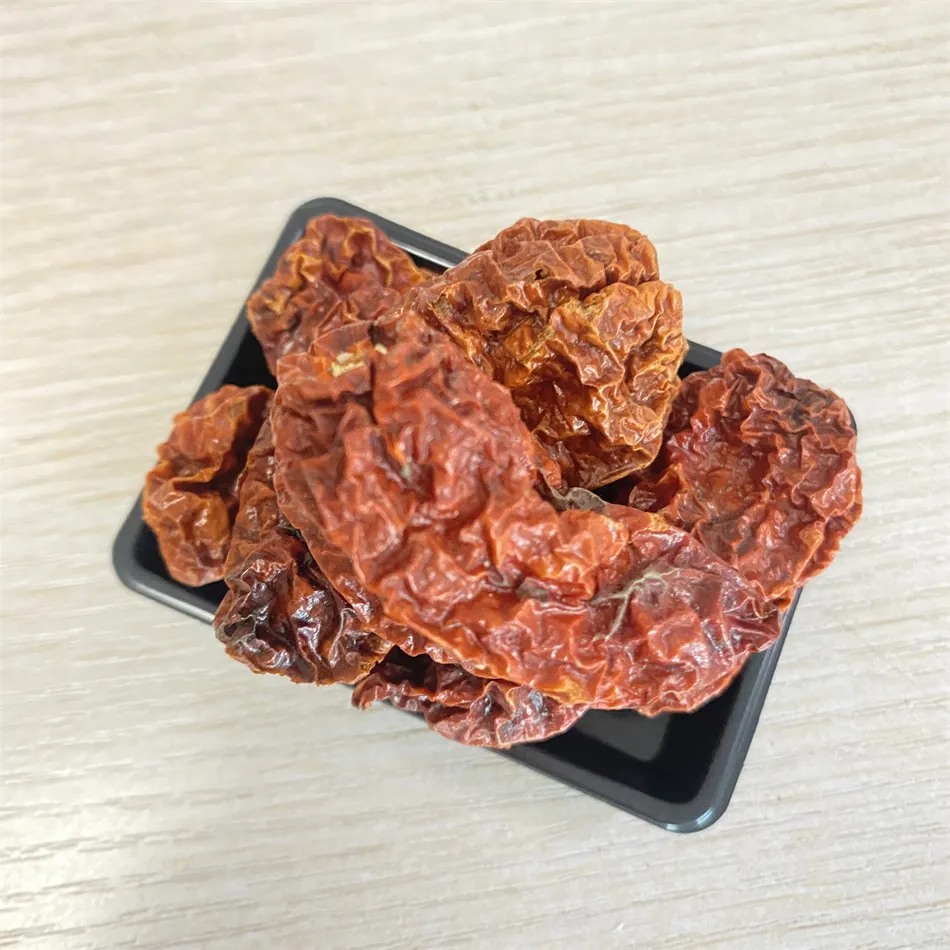
Why it’s trending
Two things: predictable heat and cleaner supply chains. Many customers say the heat curve feels “honest”—not a short spike, but a sustained burn that carries through cooking. And, yes, demand is strong in the U.S. and Europe, partly because brands want fewer surprises in micro and moisture when scaling.
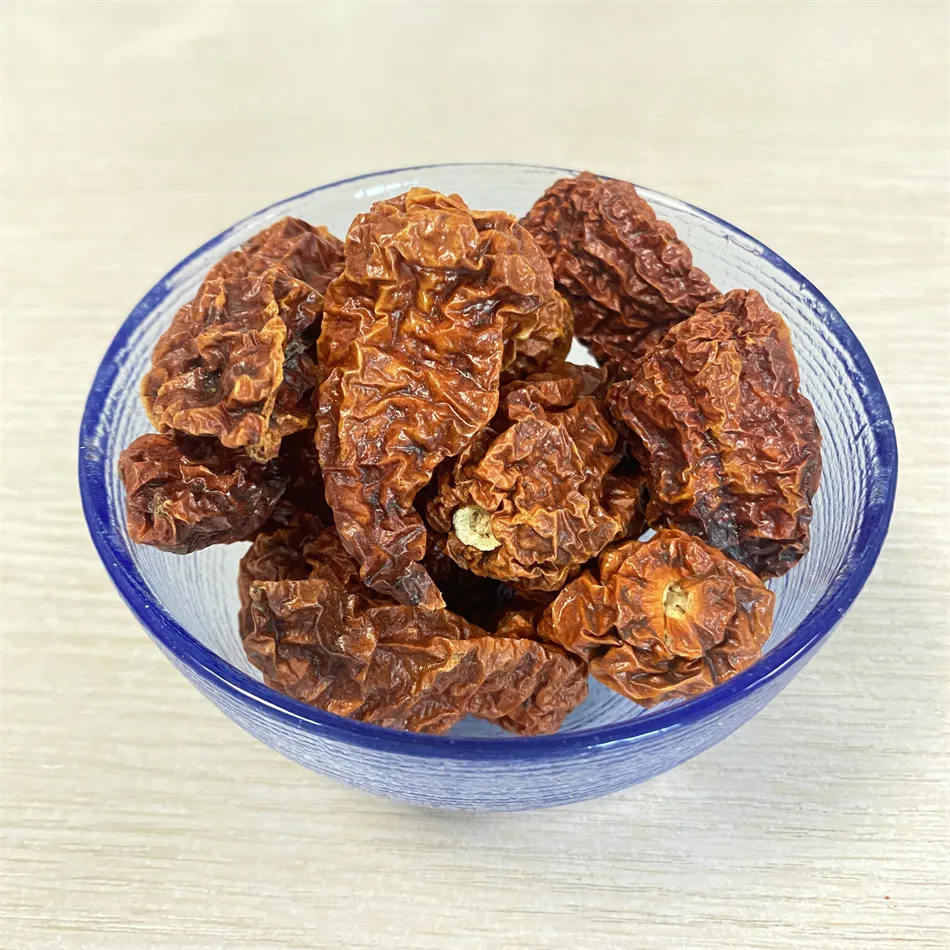
Technical specifications (typical targets)
| Origin | Yunnan Province (growing); Processing: SOUTH OF ROAD, 2 KMS EAST OF LONGYAO COUNTY, HEBEI, CHINA |
| Scoville Heat Units | ≈600,000 SHU (HPLC capsaicinoids; real-world use may vary) [1] |
| Pod size | Around 3–5 cm; compact, wrinkled surface |
| Moisture | ≤12% typical target (AOAC methods) [1] |
| Micro (guidance) | TPC and Yeast/Mold per ISO 4833-1 / ISO 21527; Salmonella: n.d. in 25 g (FDA BAM) [2][3] |
| Packaging | Food-grade inner liner; nitrogen-flush optional; 10–20 kg cartons |
| Shelf life | ≈24 months, cool & dry, out of light |
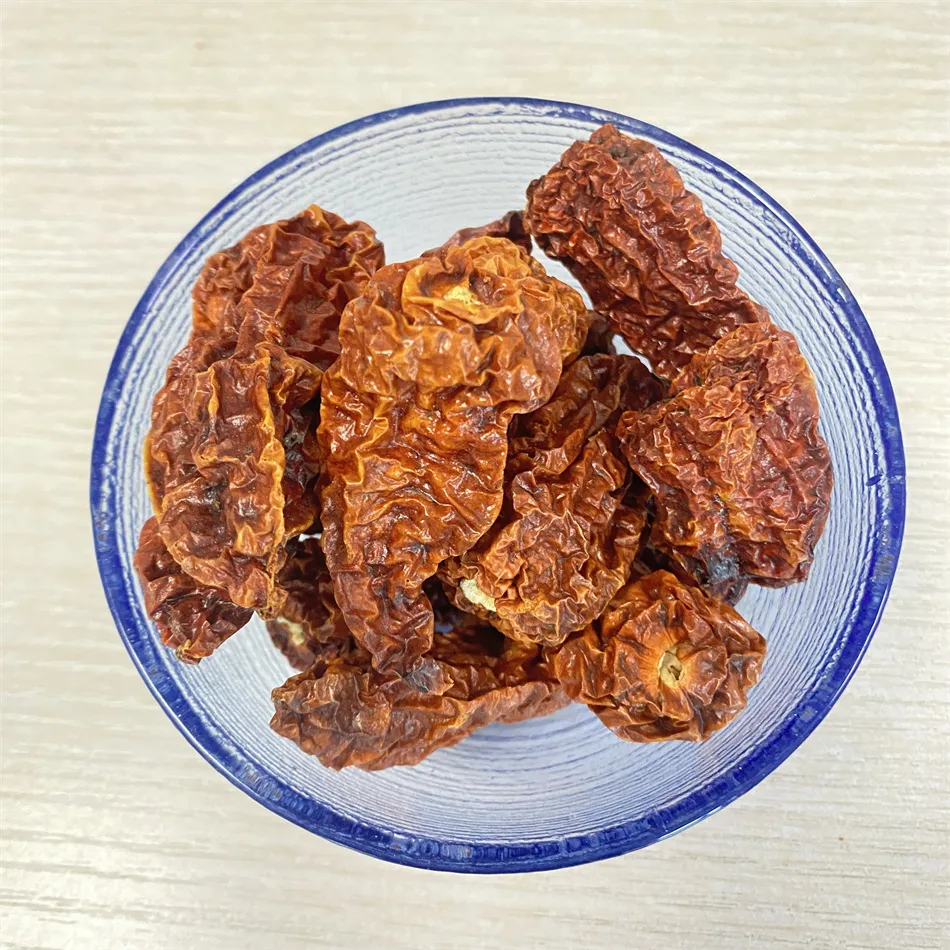
Process flow (how the heat gets consistent)
- Raw material: mature ghost chili from Yunnan; harvest at peak red.
- Primary drying: controlled sun-dry or low-temp dehydration to preserve capsaicinoids.
- Cleaning & destemming: mechanical + manual.
- Sorting: optical color sorters; foreign matter screening; metal detection (Fe/Non-Fe/SS).
- Moisture tuning: finish-dry to spec; equilibrate.
- Testing: HPLC for capsaicinoids (AOAC 995.03); micro per ISO 4833-1/21527; Salmonella per BAM. [1][2][3]
- Packing: nitrogen flush optional; tamper-evident seals.
- Documentation: lot traceability; COA on request; labeling per buyer market (e.g., Codex/US). [4]
Applications and advantages
Use cases: hot sauces, chili oils, meat rubs, snack dusts, ramen bases, spice blends, and extraction for capsaicin-based R&D. Advantages include strong aromatic top-notes for a ghost pepper (not all do), compact pods that mill evenly, and—in practice—fewer clumps during grinding when moisture holds under 11%. Actually, it seems small-batch makers like the “forgiving” heat curve in cooking reductions.
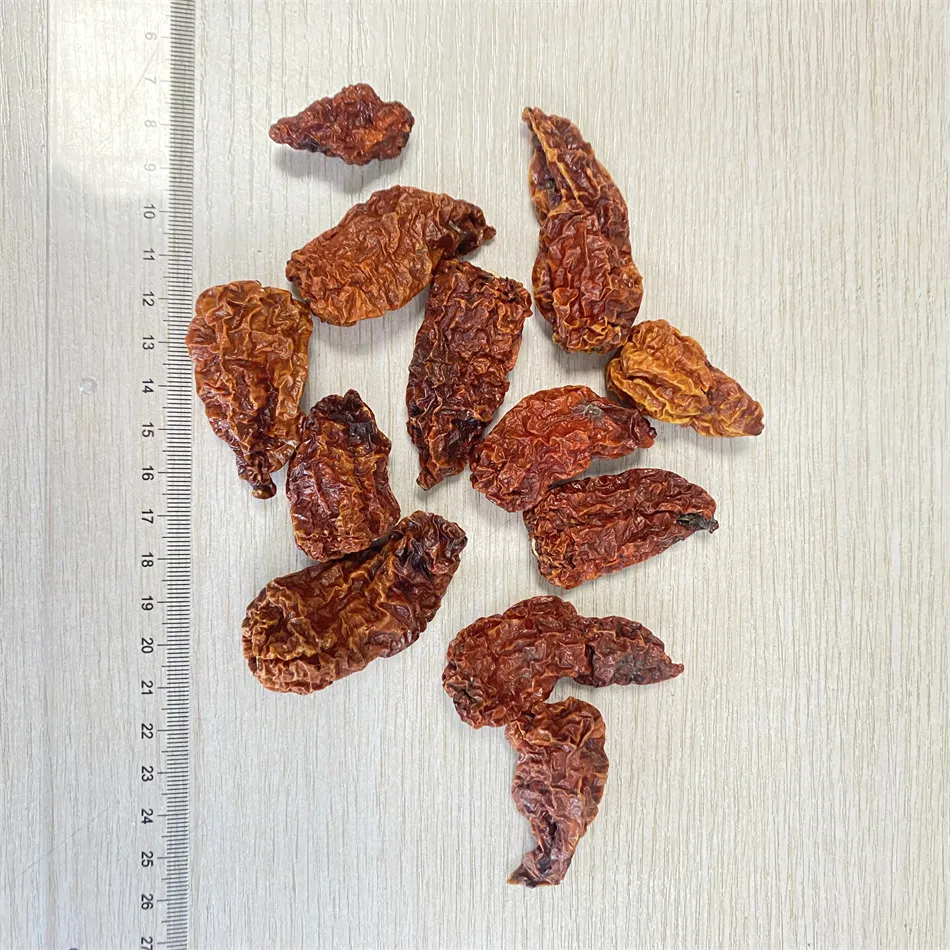
Vendor comparison (field-notes style)
| Vendor | Heat Verification | Sorting/Metal | Lead Time | Traceability |
|---|---|---|---|---|
| Ghost Chili Pods2 | HPLC COA (≈600k SHU) | Optical sort + metal detect | Around 2–4 weeks, seasonal | Lot-based, farm-to-pack |
| Generic A | Label claim only | Basic screening | 1–2 weeks | Limited |
| Bulk Reseller B | Third-party on request | Metal detect only | Stock-dependent | Mixed lots |
Customization checklist
- Cut or grind size (flakes 4–8 mesh, powder 20–60 mesh).
- Heat spec window (e.g., 500–700k SHU targets; verification via HPLC).
- Moisture target (≤10% for fine milling, ≈12% for pods).
- Private label, barcode/lot printing, nitrogen flush, desiccants.
Case notes from the field
A Midwest hot-sauce startup switched to Ghost Chili Pods2 after inconsistent SHU with mixed-origin supply. They reported steadier batch heat and fewer grind stoppages, especially in humid months. In Europe, a spice co-packer told me their QA flagged fewer visual defects post optical sort—small thing, big yield.
Quality, standards, and what to ask for
Request COAs with HPLC capsaicinoids (AOAC 995.03), moisture, and microbiology (ISO methods). Many buyers also align to Codex guidance for spices and culinary herbs. For certifications, ask suppliers about food safety programs such as HACCP and ISO 22000 (documentation varies by plant). [1][2][3][4]
Quick test targets (illustrative)
- Capsaicinoids: aligns with ≈600k SHU target (HPLC). [1][5]
- Moisture: 8–12% typical for pods.
- Micro: TPC/Yeast-Mold within buyer spec; Salmonella: not detected/25 g. [2][3]
Note: Specs above are typical targets; verify current lot COA. Real-world results may vary by season and storage.
Citations
- AOAC Official Method 995.03, Capsaicinoids in Capsicum by HPLC. https://www.aoac.org
- ISO 4833-1:2013, Microbiology of the food chain — Enumeration of microorganisms. https://www.iso.org/standard/53728.html
- FDA BAM, Chapter 5: Salmonella. https://www.fda.gov/food/laboratory-methods-food/bacteriological-analytical-manual-bam
- Codex CXS 353: General Standard for Spices and Culinary Herbs. https://www.fao.org/fao-who-codexalimentarius
- Encyclopaedia Britannica, Scoville scale overview. https://www.britannica.com/science/Scoville-heat-unit
-
Exploring The Rich Flavors Of Famous Mild Dried Chiles For Culinary Excellence
NewsFeb.24,2026
-
Exploring the Factors Behind the Famous Price of Red Pepper Flakes
NewsFeb.11,2026
-
Discover the Rich Flavors of Famous Paprika Powder 1kg for Culinary Excellence
NewsJan.30,2026
-
15,000 SHU Crushed Chili Pepper - Xuri Food Co.|Natural Spice Solution&Customizable Heat
NewsDec.27,2025
-
ODM Making Crushed Red Pepper | Spice Manufacturing Solutions & Global Sourcing
NewsDec.14,2025
-
Discover the Rich Flavors of ODM Korean Hot Chili Powder | Global Sourcing Guide
NewsDec.13,2025
 Afrikaans
 Albanian
 Amharic
 Arabic
 Armenian
 Azerbaijani
 Basque
 Belarusian
 Bengali
 Bosnian
 Bulgarian
 Catalan
 Cebuano
 Corsican
 Croatian
 Czech
Czech
 Danish
 Dutch
Dutch
 Esperanto
 Estonian
 Finnish
 French
 Frisian
 Galician
 Georgian
 German
 Greek
Greek
 Gujarati
 Haitian Creole
 Hausa
Hausa
 Hawaiian
 Hebrew
 Hindi
Hindi
 Miao
Miao
 Hungarian
 Icelandic
 Igbo
Igbo
 Indonesian
 Irish
Irish
 Italian
 Japanese
 Javanese
 Kannada
 Kazakh
 Khmer
Khmer
 Rwandese
 Korean
 Kurdish
 Kyrgyz
 Lao
Lao
 Latin
Latin
 Latvian
 Lithuanian
 Luxembourgish
 Macedonian
 Malgashi
 Malay
Malay
 Malayalam
 Maltese
 Maori
Maori
 Marathi
 Mongolian
 Myanmar
 Nepali
 Norwegian
 Norwegian
 Occitan
 Pashto
 Persian
 Polish
 Portuguese
 Punjabi
 Romanian
 Russian
 Samoan
 Scottish Gaelic
 Serbian
 Sesotho
 Shona
Shona
 Sindhi
 Sinhala
 Slovak
 Slovenian
 Somali
 Spanish
 Sundanese
 Swahili
 Swedish
 Tagalog
 Tajik
Tajik
 Tamil
Tamil
 Tatar
Tatar
 Telugu
 Thai
Thai
 Turkish
 Turkmen
 Ukrainian
 Urdu
Urdu
 Uighur
 Uzbek
Uzbek
 Vietnamese
 Welsh
Welsh
 Bantu
Bantu
 Yiddish
 Yoruba
 Zulu
Zulu
 English