
LONGYAO COUNTY XURI FOOD CO.,LTD.
Nov . 07, 2025 12:25 Back to list
Chili Powder-70 Mesh | Vibrant Color, Consistent Heat
Field Notes on a Fiery Classic: Chili Powder at 70–80K SHU
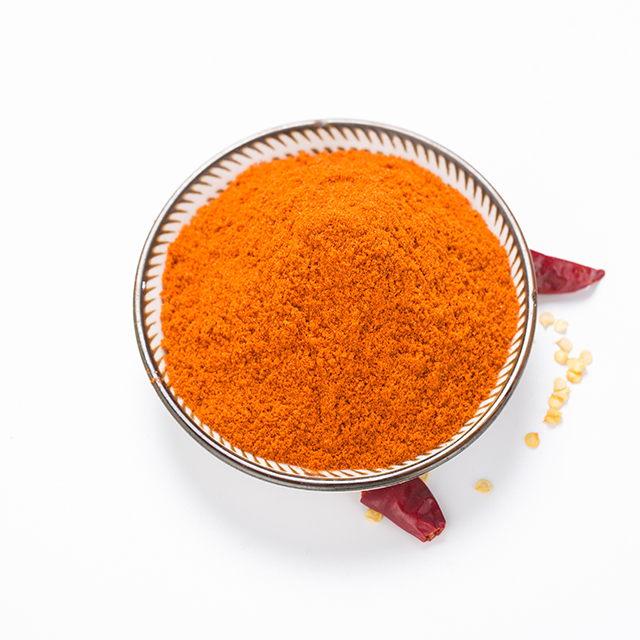
If you cook professionally (or just love a proper kick), you’ll appreciate [Chili Powder-70]. It hits that sweet spot of heat—decisive but not brutal—while staying clean-label and consistent. Origin matters here: this lot is milled in SOUTH OF ROAD, 2 KMS EAST OF LONGYAO COUNTY, HEBEI, CHINA, and frankly, the uniformity surprised me the first time I tested it in a rub.
What’s driving demand right now
Two words: clean label. No additives, tight contaminant controls, and auditable supply chains. Many customers say they’re shifting SKUs away from vague “chili blends” toward single-origin powders with declared SHU and ASTA color. Export traction to the U.S. and EU also tells you the compliance housekeeping is solid.
Technical specifications (quick view)
| Heat (SHU) | ≈70,000–80,000 (HPLC) |
| Color (ASTA) | ≈80–100 (real-world use may vary) |
| Moisture | ≤10% |
| Mesh (granulometry) | ≥80% through 60 mesh |
| Aflatoxin | B1 ≤5 µg/kg; Total ≤10 µg/kg |
| Microbiology | TPC ≤10^5 cfu/g; Salmonella absent/25 g |
| Packaging | 25 kg multi-layer bag, inner food-grade liner, nitrogen flush |
| Shelf/Service life | 18–24 months sealed, cool/dry; best color within 12 months |
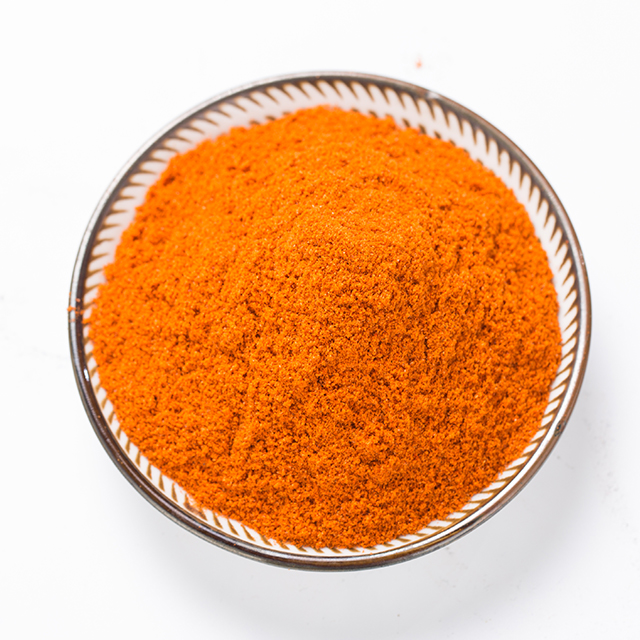
How it’s made (process flow)
- Raw material: sun-ripened Capsicum annuum pods; destemmed, sorted.
- Cleaning: air/classifier + metal detection; foreign matter to ASTA cleanliness spec.
- Milling: controlled temp grind; sieve to target mesh; low-oxygen handling.
- Decontamination: saturated steam step validated to ≥5-log Salmonella reduction.
- Testing: SHU by HPLC (ASTA 21.3); moisture; ASTA color; micro per ISO methods.
- Packing: laminated bags with inner liner; palletized; COA lot-traceable.
Recent batch data (illustrative): SHU 75,600; moisture 8.3%; ASTA 95; Salmonella ND/25 g; Aflatoxin B1 2.1 µg/kg. Not bad.
Applications and advantages
- Hot sauces & sambals: 0.5–1.2% addition for steady heat without bitterness.
- Snack dusting: bright color, binds well with oil carriers on extruded bases.
- BBQ rubs & plant-based proteins: reliable 70–80K SHU simplifies blending.
- RTE soups/meals: uniform mesh reduces “hot spots.”
Advantages: export-grade compliance, additive-free, traceable origin, and consistent capsaicinoid profile. To be honest, consistency is what buyers come back for.
Vendor snapshot (comparison)
| Vendor | SHU Range | Additives | Certs | Lead Time |
|---|---|---|---|---|
| [Chili Powder-70] (Hebei) | ≈70–80K (HPLC) | None (clean label) | ISO 22000, HACCP, Halal/Kosher | 2–4 weeks, stock-dependent |
| Generic distributor | 50–90K mixed lots | Possible anti-caking | Varies | 3–6 weeks |
| Artisanal mill | Unverified | None | Limited | Small-batch only |

Customization
Mesh 40–100; color sorting for ASTA targets; heat tuning (blend-back) to 60K–90K SHU; steam vs. irradiation policies per market; organic on request; private-label bags and small packs.
Case notes & feedback
[Chili Powder-70] helped a U.S. snack brand cut variance in dusting heat by ~30% (HPLC monitoring over 8 runs). An EU sauce maker reported cleaner back-of-pack and faster QA release after switching to steam-treated lots. It seems that consistent SHU took headaches out of reformulation.
Compliance & standards referenced
HACCP/ISO 22000 plant controls; SHU via HPLC to ASTA methods; micro per ISO; aflatoxins to EU limits; pesticide MRLs per EU regs; Salmonella absence confirmed before ship. Honestly, that’s the baseline you want.
- ASTA Analytical Method 21.3: Capsaicinoids by HPLC.
- ISO 22000:2018 Food safety management systems.
- Regulation (EC) No 1881/2006 (Aflatoxin limits in foodstuffs).
- ISO 4833-1:2013 Microbiology of the food chain—colony count at 30°C.
- ISO 6579-1:2017 Detection of Salmonella spp.
- Regulation (EC) No 396/2005 on maximum residue levels of pesticides.
-
Discover Famous Paprika Powder Made Of: Origins, Quality & Global Uses
NewsDec.03,2025
-
Discovering Famous Spicy Pepper Powder: Global Uses, Benefits & Trends
NewsDec.03,2025
-
Understanding Famous Mild Dried Chilis: Global Uses, Benefits & Varieties
NewsDec.03,2025
-
Comprehensive Guide to ODM Ground Red Chilis: Quality, Applications & Trends
NewsDec.02,2025
-
Comprehensive Guide to odm Whole Red Chili: Quality, Applications & Global Impact
NewsDec.02,2025
-
Comprehensive Guide to odm Dried Red Chili Pods – Quality, Uses & Trends
NewsDec.02,2025
 Afrikaans
 Albanian
 Amharic
 Arabic
 Armenian
 Azerbaijani
 Basque
 Belarusian
 Bengali
 Bosnian
 Bulgarian
 Catalan
 Cebuano
 Corsican
 Croatian
 Czech
Czech
 Danish
 Dutch
Dutch
 Esperanto
 Estonian
 Finnish
 French
 Frisian
 Galician
 Georgian
 German
 Greek
Greek
 Gujarati
 Haitian Creole
 Hausa
Hausa
 Hawaiian
 Hebrew
 Hindi
Hindi
 Miao
Miao
 Hungarian
 Icelandic
 Igbo
Igbo
 Indonesian
 Irish
Irish
 Italian
 Japanese
 Javanese
 Kannada
 Kazakh
 Khmer
Khmer
 Rwandese
 Korean
 Kurdish
 Kyrgyz
 Lao
Lao
 Latin
Latin
 Latvian
 Lithuanian
 Luxembourgish
 Macedonian
 Malgashi
 Malay
Malay
 Malayalam
 Maltese
 Maori
Maori
 Marathi
 Mongolian
 Myanmar
 Nepali
 Norwegian
 Norwegian
 Occitan
 Pashto
 Persian
 Polish
 Portuguese
 Punjabi
 Romanian
 Russian
 Samoan
 Scottish Gaelic
 Serbian
 Sesotho
 Shona
Shona
 Sindhi
 Sinhala
 Slovak
 Slovenian
 Somali
 Spanish
 Sundanese
 Swahili
 Swedish
 Tagalog
 Tajik
Tajik
 Tamil
Tamil
 Tatar
Tatar
 Telugu
 Thai
Thai
 Turkish
 Turkmen
 Ukrainian
 Urdu
Urdu
 Uighur
 Uzbek
Uzbek
 Vietnamese
 Welsh
Welsh
 Bantu
Bantu
 Yiddish
 Yoruba
 Zulu
Zulu
 English