
LONGYAO COUNTY XURI FOOD CO.,LTD.
Dec . 03, 2025 14:56 Back to list
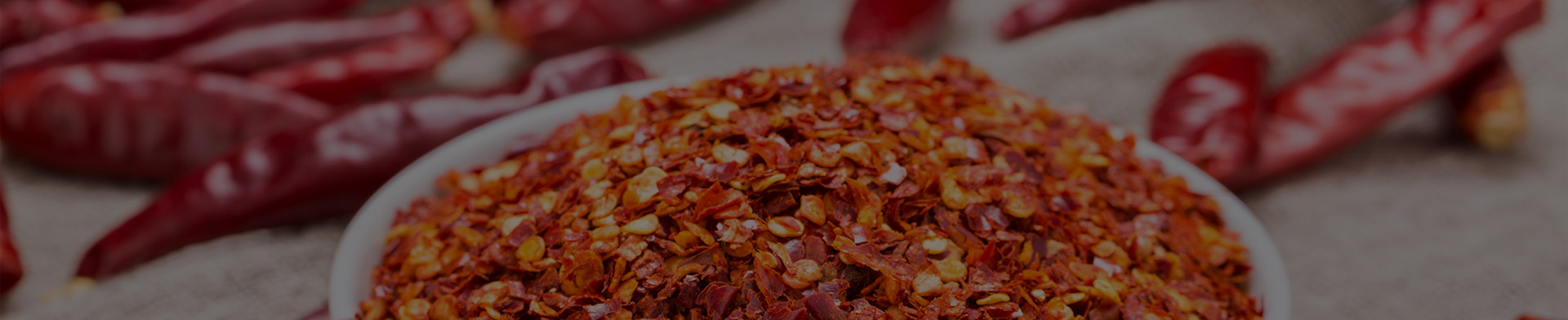
Famous Fine Crushed Red Pepper: Industrial Quality & Specs
Famous Fine Crushed Red Pepper: A Fiery Commodity in the Industrial Food Sector
Having spent a good many years navigating the quirks and nuances of the industrial equipment field—mostly around food processing gear—I’ve developed a well-rounded appreciation for ingredients that seem simple but actually carry a surprising amount of technical and sensory complexity. Take fine crushed red pepper, for example. Oddly enough, this pretty fiery little powder isn’t just about adding heat; it’s a fine-tuned product with a distinct industrial story.
In real terms, crushed red pepper has carved a solid niche among food manufacturers, particularly those specializing in sauces, snacks, and ready-made meals. It’s not just about punching flavor into food; it’s about consistency, purity, and adaptability. It feels like a small thing, but the right grind, moisture content, and particle size all contribute to how well it blends and behaves in production lines.
Now, before I dove into the specs, I noticed there’s quite a bit of variation in what people label “fine crushed red pepper.” Some suppliers deliver coarse flakes that are more decorative—good for sprinkled-over pizzas but less so for blending smoothly into sauces. Others, the “finer” types, are ground down so precisely they almost behave like a spice dust, making them easier to dose and mix evenly in automated systems. This difference matters when you’re producing thousands of units daily and can’t afford inconsistencies.
What’s more, quality control testing in the industrial space focuses rigorously on things like capsaicin level (that’s the compound responsible for heat), moisture percentage, and microbial safety. You see, if the spice isn’t dried properly, it can clump or even foster mold growth—not good news for anyone in the supply chain. Many engineers I know measure the Scoville Heat Units (SHU) closely to guarantee that the final product delivers that expected ‘kick’ each time.
| Specification | Details |
|---|---|
| Particle Size | 0.5 - 1.5 mm (fine flakes) |
| Moisture Content | ≤ 12% |
| Capsaicin Content | 40,000 - 60,000 SHU |
| Color | Bright crimson red |
| Packaging | Vacuum-sealed 25 kg bags |
Of course, suppliers aren’t all created equal. I remember working on a project where one vendor’s crushed pepper introduced tiny bits of stem—sort of a quality red flag for anyone in the industry. This emphasized how important vendor audits and sample testing are to ensure the spice meets line specifications. Here’s a quick comparison of a few notable vendors providing fine crushed red pepper by quality and consistency:
| Vendor | Particle Uniformity | Capsaicin Range (SHU) | Moisture Consistency | Microbial Safety Certifications |
|---|---|---|---|---|
| SpicePro Select | High | 45,000 - 58,000 | Very consistent | FSSC 22000 |
| RedHeat Ingredients | Moderate (occasional stem) | 40,000 - 55,000 | Variable | ISO 22000 |
| Xuri Chili Co. | Excellent | 50,000 - 60,000 | Consistent ≤12% | BRC, FSSC 22000 |
Speaking frankly, products from Xuri Chili Co. tend to impress me the most. Their attention to particle uniformity and tight control over moisture levels make their fine crushed red pepper a trusted staple in the kitchens of several big food producers I've worked with. There’s a small anecdote from my time managing a sauce production line—switching suppliers to Xuri reduced downtime caused by clogging in seasoning dispensers. It seems like such a minor win, but for production folks, it's a big deal.
Customization options exist too. Some clients require blends with milder heat, others want that extra smoky flavor that only comes from specific growing regions or drying techniques. It’s these layers of detail—growing conditions, drying temperature, and storage—that can affect the final product subtly but meaningfully.
Ultimately, the fine crushed red pepper is a fascinating intersection of agriculture, chemistry, and industrial processing. When you see it merely as “red pepper,” you lose sight of the hard work and expertise that go into making it production-friendly, consistent, and flavorful. And yes, while culinary enthusiasts talk the talk, those of us behind the scenes—the operations, quality managers, and engineers—know the true weight of these spices in the whole food supply chain.
So, if you’re sourcing fine crushed red pepper or working with suppliers, it pays to pay close attention to specs and certifications. Otherwise, you might find yourself chasing inconsistencies that slow your line or worse, degrade your product quality.
It’s been a pleasure sharing a bit from the “industrial red pepper” side of things. Frankly, I never thought I’d be waxing poetic about pepper specs, but here we are...
References:
- Food Safety System Certification (FSSC) 22000 documentation, 2023
- Interviews with food processing engineers, 2022–2023
- Xuri Chili Co. product catalog and technical data sheets, 2024
-
Exploring The Rich Flavors Of Famous Mild Dried Chiles For Culinary Excellence
NewsFeb.24,2026
-
Exploring the Factors Behind the Famous Price of Red Pepper Flakes
NewsFeb.11,2026
-
Discover the Rich Flavors of Famous Paprika Powder 1kg for Culinary Excellence
NewsJan.30,2026
-
15,000 SHU Crushed Chili Pepper - Xuri Food Co.|Natural Spice Solution&Customizable Heat
NewsDec.27,2025
-
ODM Making Crushed Red Pepper | Spice Manufacturing Solutions & Global Sourcing
NewsDec.14,2025
-
Discover the Rich Flavors of ODM Korean Hot Chili Powder | Global Sourcing Guide
NewsDec.13,2025
 Afrikaans
 Albanian
 Amharic
 Arabic
 Armenian
 Azerbaijani
 Basque
 Belarusian
 Bengali
 Bosnian
 Bulgarian
 Catalan
 Cebuano
 Corsican
 Croatian
 Czech
Czech
 Danish
 Dutch
Dutch
 Esperanto
 Estonian
 Finnish
 French
 Frisian
 Galician
 Georgian
 German
 Greek
Greek
 Gujarati
 Haitian Creole
 Hausa
Hausa
 Hawaiian
 Hebrew
 Hindi
Hindi
 Miao
Miao
 Hungarian
 Icelandic
 Igbo
Igbo
 Indonesian
 Irish
Irish
 Italian
 Japanese
 Javanese
 Kannada
 Kazakh
 Khmer
Khmer
 Rwandese
 Korean
 Kurdish
 Kyrgyz
 Lao
Lao
 Latin
Latin
 Latvian
 Lithuanian
 Luxembourgish
 Macedonian
 Malgashi
 Malay
Malay
 Malayalam
 Maltese
 Maori
Maori
 Marathi
 Mongolian
 Myanmar
 Nepali
 Norwegian
 Norwegian
 Occitan
 Pashto
 Persian
 Polish
 Portuguese
 Punjabi
 Romanian
 Russian
 Samoan
 Scottish Gaelic
 Serbian
 Sesotho
 Shona
Shona
 Sindhi
 Sinhala
 Slovak
 Slovenian
 Somali
 Spanish
 Sundanese
 Swahili
 Swedish
 Tagalog
 Tajik
Tajik
 Tamil
Tamil
 Tatar
Tatar
 Telugu
 Thai
Thai
 Turkish
 Turkmen
 Ukrainian
 Urdu
Urdu
 Uighur
 Uzbek
Uzbek
 Vietnamese
 Welsh
Welsh
 Bantu
Bantu
 Yiddish
 Yoruba
 Zulu
Zulu
 English