
LONGYAO COUNTY XURI FOOD CO.,LTD.
Oct . 02, 2025 12:50 Back to list
Red Pepper Flakes: Fresh, Fiery, Food-Grade—Why Us?
Tianying cut: a pragmatic buyer’s guide to red pepper flakes
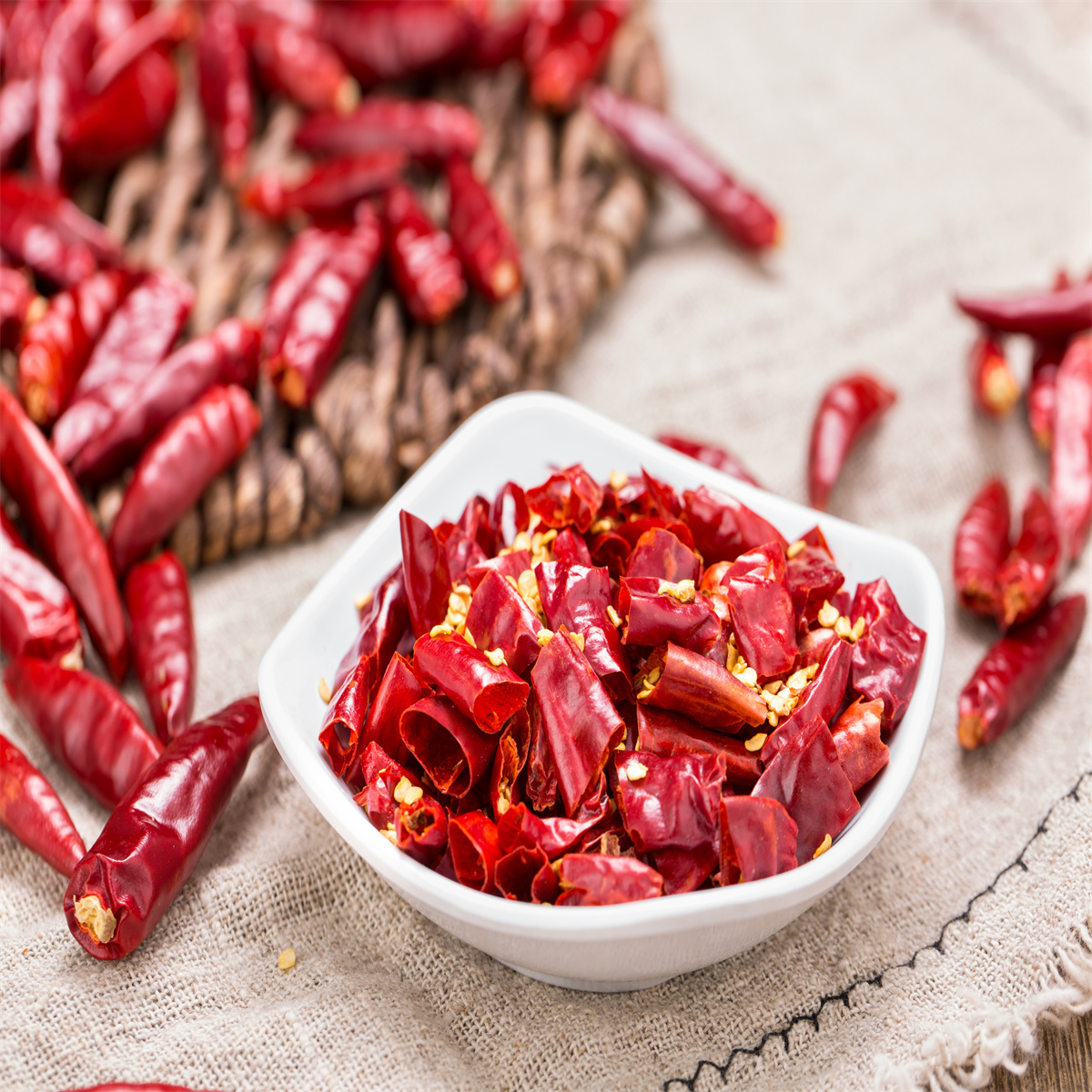
I’ve spent enough time with spice buyers to know one thing: consistency beats hype. That’s precisely why Tianying cut from Longyao County, Hebei, keeps popping up in conversations. It’s 100% natural, no additives, clean color, stable heat—and, to be honest, surprisingly customizable for something as simple as red pepper flakes. Origin? SOUTH OF ROAD, 2 KMS EAST OF LONGYAO COUNTY, HEBEI CHINA—yes, that specific. Traceability nerds will like that.
Why the market cares right now
Industry trends are fairly clear: clean-label seasonings, dialable heat levels, and tighter specs for contaminants. Snack makers and QSRs want red pepper flakes that don’t swing wildly in SHU; meal kits want visually bright pieces that look “chef-y” on camera. And wholesale buyers? They want seed ratio control to reduce bitterness and control oil bleed in hot sauces.
How it’s made (short version that actually matters)
- Raw materials: sun-ripened Capsicum annuum pods, varietal mix tuned for color and steady capsaicinoids.
- Method: washing → air-drying → stem removal → calibrated cutting (≈3–8 mm typical) → seed fractioning by sieve → metal detection → optical sort → packing in poly-lined bags.
- Testing: capsaicinoids by HPLC (ASTA method), moisture by oven or moisture analyzer, micro (TPC/Yeast-Mold), aflatoxins, heavy metals, and pesticide residues as per buyer market (EU/US).
- Service life: around 18–24 months if kept cool, dark, and dry (≤25°C; RH ≤65%). Real-world use may vary.
- Industries: pizza/QSR, noodles and dumplings, chili oil and crisp, snack toppings, RTE meal kits, industrial sauces.
Product specifications (Tianying cut)
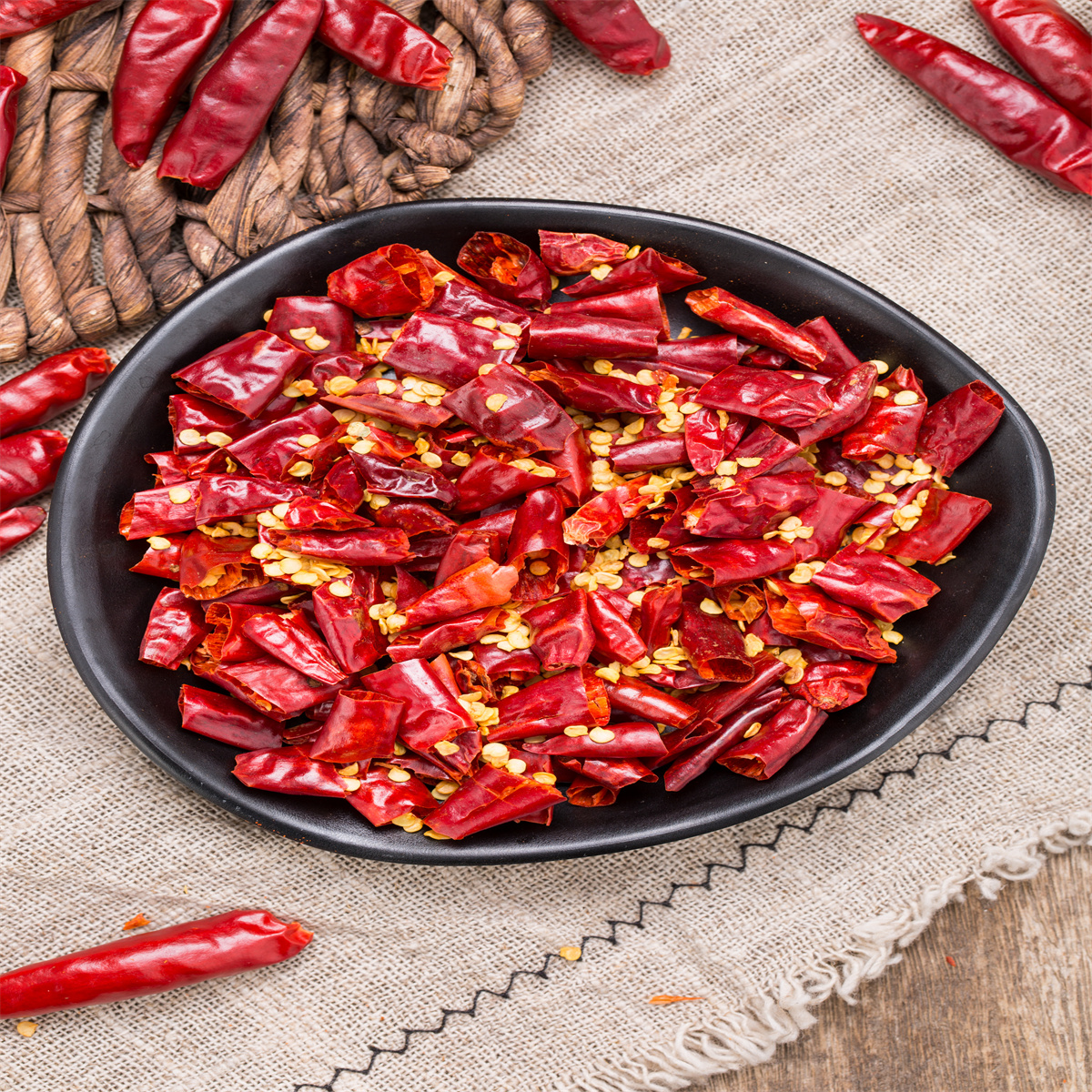
| Cut length | ≈3–8 mm (customizable) | Seeds proportion | ≈0–30% (customizable) |
| Pungency | ≈8,000–40,000 SHU (batch-tuned) | Moisture | ≤12% |
| Color | Bright red; low brown fleck tolerance | Metal detection | Fe ≥ 1.5 mm; Non-Fe ≥ 2.0 mm |
| Micro (typical) | TPC ≤ 5×10^5 cfu/g; Yeast/Mold ≤ 10^4 cfu/g; Salmonella: absent/25 g | Aflatoxin (typical) | B1 ≤ 5 μg/kg; Total ≤ 10 μg/kg |
| Packaging | 2×10 kg poly-lined in 20 kg cartons (options available) | Allergens | None added; produced in spice-only facility |
QC snapshot (example): HPLC capsaicinoids 120 mg/kg; SHU ≈ 20,000; moisture 10.4%; pesticide residues compliant with EU Reg. 396/2005 on last COA; visual defects ≤ 1.5% by weight. Always ask for batch COA—numbers move a little with harvests.
Vendor landscape (my field notes)
| Vendor | Origin | Heat control | Customization | Traceability | Lead time | Price level |
|---|---|---|---|---|---|---|
| Tianying cut | Hebei, China | Stable; HPLC-tuned | Length + seed ratio | Good farm-to-lot | Fast (stock + cut) | Competitive |
| Domestic Wholesale A | Mixed imports | Variable between lots | Limited | Lot-level only | Immediate (in-country) | Mid–High |
| Import Brand B | Turkey/India | Good, not custom | Standard SKUs | Brand-level | Moderate | Higher |
Use cases and feedback
- Pizza/QSR: consistent pop without scorching—many customers say the color “reads” well on camera and in delivery.
- Chili oil/crisp: low seed ratios reduce bitterness; color holds in hot oil. Actually a small change here matters a lot.
- Snack toppings: fine cuts blend well with sesame, garlic chips, and nori without dusting issues.
Case study (abbreviated): A regional pizza chain switched to Tianying cut with 10% seeds and ≈18,000 SHU. Results over 8 weeks: topping waste down ~12%, customer “heat just right” scores up 9 points in post-purchase surveys. Not life-changing, but real.
Compliance, certifications, and docs
Typical buyer pack includes COA, pesticide residue report (per EU 396/2005 or local market), micro panel, and aflatoxin results. Facility-level certifications commonly requested: ISO 22000 or HACCP, and sometimes BRCGS. Always verify certificate scope and validity—seems obvious, but you’d be surprised.
Final notes for procurement
- Lock specs: SHU window, seed %, cut length, micro limits, and metal detection thresholds.
- Shelf life clauses: store ≤25°C, away from light and moisture; nitrogen flush if you need extended stability.
- Pre-shipment: request HPLC capsaicinoid data and a retained sample photo. Quick and worth it.
Authoritative citations
-
Discover Famous Paprika Powder Made Of: Origins, Quality & Global Uses
NewsDec.03,2025
-
Discovering Famous Spicy Pepper Powder: Global Uses, Benefits & Trends
NewsDec.03,2025
-
Understanding Famous Mild Dried Chilis: Global Uses, Benefits & Varieties
NewsDec.03,2025
-
Comprehensive Guide to ODM Ground Red Chilis: Quality, Applications & Trends
NewsDec.02,2025
-
Comprehensive Guide to odm Whole Red Chili: Quality, Applications & Global Impact
NewsDec.02,2025
-
Comprehensive Guide to odm Dried Red Chili Pods – Quality, Uses & Trends
NewsDec.02,2025
 Afrikaans
 Albanian
 Amharic
 Arabic
 Armenian
 Azerbaijani
 Basque
 Belarusian
 Bengali
 Bosnian
 Bulgarian
 Catalan
 Cebuano
 Corsican
 Croatian
 Czech
Czech
 Danish
 Dutch
Dutch
 Esperanto
 Estonian
 Finnish
 French
 Frisian
 Galician
 Georgian
 German
 Greek
Greek
 Gujarati
 Haitian Creole
 Hausa
Hausa
 Hawaiian
 Hebrew
 Hindi
Hindi
 Miao
Miao
 Hungarian
 Icelandic
 Igbo
Igbo
 Indonesian
 Irish
Irish
 Italian
 Japanese
 Javanese
 Kannada
 Kazakh
 Khmer
Khmer
 Rwandese
 Korean
 Kurdish
 Kyrgyz
 Lao
Lao
 Latin
Latin
 Latvian
 Lithuanian
 Luxembourgish
 Macedonian
 Malgashi
 Malay
Malay
 Malayalam
 Maltese
 Maori
Maori
 Marathi
 Mongolian
 Myanmar
 Nepali
 Norwegian
 Norwegian
 Occitan
 Pashto
 Persian
 Polish
 Portuguese
 Punjabi
 Romanian
 Russian
 Samoan
 Scottish Gaelic
 Serbian
 Sesotho
 Shona
Shona
 Sindhi
 Sinhala
 Slovak
 Slovenian
 Somali
 Spanish
 Sundanese
 Swahili
 Swedish
 Tagalog
 Tajik
Tajik
 Tamil
Tamil
 Tatar
Tatar
 Telugu
 Thai
Thai
 Turkish
 Turkmen
 Ukrainian
 Urdu
Urdu
 Uighur
 Uzbek
Uzbek
 Vietnamese
 Welsh
Welsh
 Bantu
Bantu
 Yiddish
 Yoruba
 Zulu
Zulu
 English