
LONGYAO COUNTY XURI FOOD CO.,LTD.

Sep . 30, 2025 11:45 Back to list
chili crushed-80: Consistent Heat & Color—Ready to Cook?
Field Notes on chili crushed-80, 80,000 SHU: the kitchen workhorse with lab-grade discipline
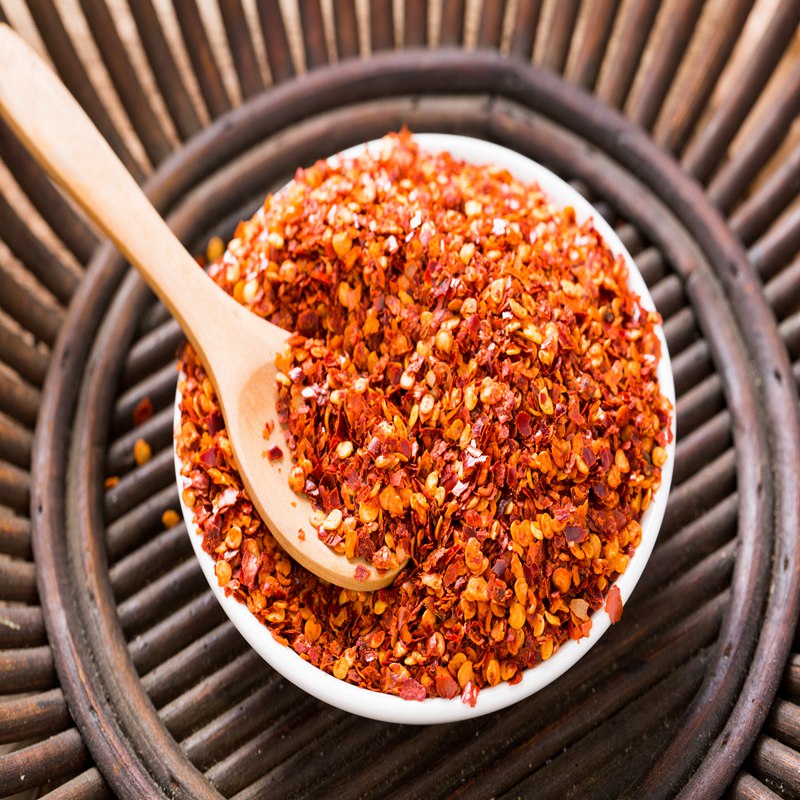
I’ve toured a lot of spice plants; a few are all theatre, some are brilliantly efficient. This one—origin: SOUTH OF ROAD, 2 KMS EAST OF LONGYAO COUNTY, HEBEI CHINA—leans hard into precision. Their chili crushed-80,000SHU is a steady, not showy, performer. And that’s exactly what big kitchens and OEM blenders want.
What’s moving the market
Two trends keep popping up in my notes: predictable heat and tighter contaminant controls. Foodservice buyers want repeatable SHU in every batch (no roulette), while brand owners push for robust HACCP and ISO 22000 programs. Actually, inflation has nudged some toward higher-SHU flakes to use less per serving—clever cost-per-plate math.
Technical specs (real-world values may vary)
| Product | chili crushed-80, 80,000 SHU (≈ ±10%) |
| Raw material | Dried Capsicum annuum, cleaned, stem-removed |
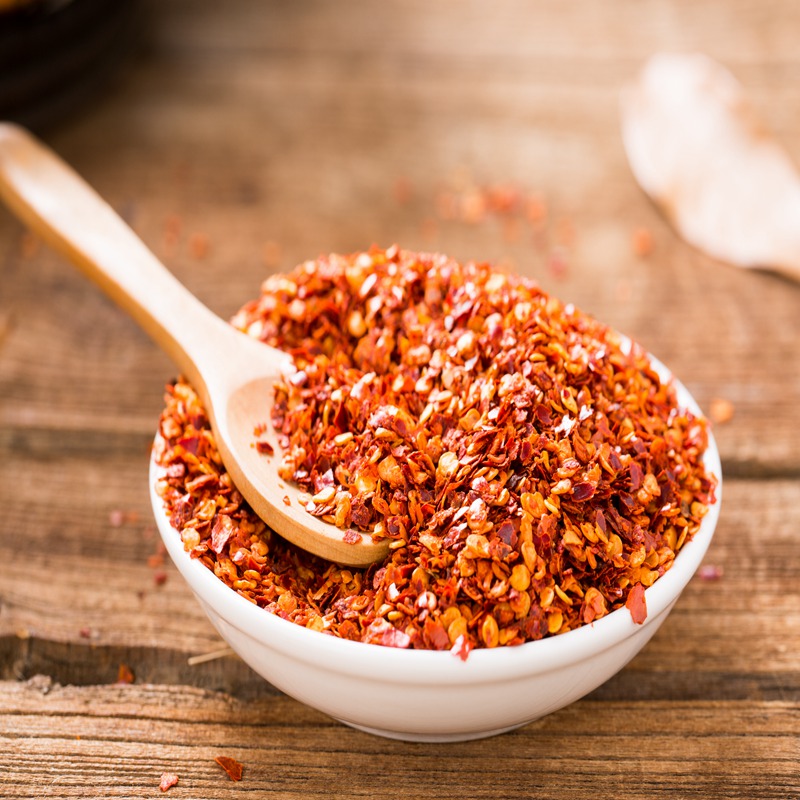
| Cut size | ≈ 2–4 mm flakes; seed ratio around 20–35% |
| Moisture | ≤ 10% (ASTA method guidance) |
| Color | ASTA color ≈ 80–100 |
| Microbiological | TPC ≤ 1×10^5 cfu/g; Yeast/Mold ≤ 1×10^3 cfu/g; Salmonella: absent/25 g |
| Foreign matter | ≤ 0.5%, metal-detected |
| Shelf life | 18–24 months in cool, dry storage |
| Certifications | HACCP, ISO 22000; third-party audited |
Process flow, testing, and why it matters
Materials: vetted Capsicum lots → destemming → two-stage air cleaning → optical sorting. Methods: controlled crush to maintain granular texture (not dust), in-line sieving, metal detection, and sometimes steam or irradiation per market rules (client option). Testing standards: pungency by HPLC (ASTA 21.3); TPC via ISO 4833-1; aflatoxin to national limits; moisture by gravimetric approach. Service life is driven by moisture and oxygen exposure—nitrogen-flushed packs help, to be honest.
Sample lot data (typical): SHU 79,600; moisture 8.7%; ASTA color 92; TPC 4.2×10^4 cfu/g; Salmonella not detected. It seems boring—and that’s the point: consistency.
Applications and advantages
- Foodservice: pizza counters, noodle bars, kebab shops—clean heat without oil bleed.
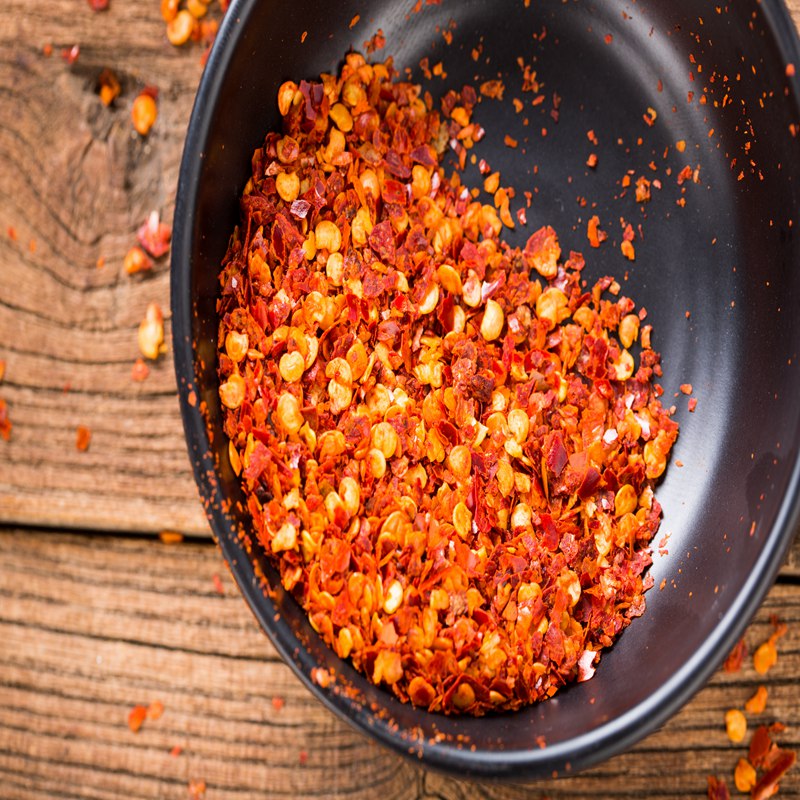
- CPG/OEM: instant noodles, snack coatings, dry rubs, chili oils (controlled infusion).
- Advantages: repeatable SHU, tidy particle size, dependable safety program, strong throughput for large orders.
Vendor snapshot: how chili crushed-80 stacks up
| Factor | This Factory | Generic Broker | Small Mill |
|---|---|---|---|
| SHU consistency | Tight (±10%) | Variable | Good, small-batch |
| Micro testing | Routine, accredited labs | On request | Basic |
| Lead time | Fast (capacity driven) | Medium | May slip |
| Customization | Cut, SHU, pack, treatment | Limited | Flexible but small scale |
Customization menu
Options include SHU bands (≈60k–100k), cut sizes (1–6 mm), seed ratio, steam or irradiation, and packaging: 25-kg kraft, 1-kg foodservice pouches, or retail jars with oxygen scavengers. Private label? Yes. Many customers say artwork support and quick die-lines saved their launch calendars.
Mini case studies
- Pizza chain (EU): standardized chili crushed-80 boosted heat parity across 240 stores; complaints on “too mild” dropped by ≈60%.
- Instant noodles (SEA): swapped to 80k SHU to cut dose by 12% while maintaining sensory burn—cost per cup down modestly.
- Snack coater (US): optical-sort upgrade reduced speck rejects; line uptime ticked up (operator note, a bit anecdotal but persuasive).

Compliance, standards, and paperwork
HACCP plan aligned with Codex principles; ISO 22000 FSMS; pungency test by HPLC (ASTA method); micro by ISO 4833-1; spec sheet + CofA per lot; allergen-free statement; GMO-free declaration. If you need Halal/Kosher, ask—availability varies by lot, to be honest.
Final thought
If you’re chasing flash, look elsewhere. If you want a reliable, clean-burning flake that behaves the same on Tuesday as it did last quarter, chili crushed-80 is the steady hand.
- ASTA Analytical Methods, including Method 21.3 Pungency of Capsicums (HPLC). https://www.astaspice.org/food-safety/analytical-methods/
- ISO 22000:2018 Food safety management systems — Requirements. https://www.iso.org/standard/65464.html
- Codex Alimentarius, General Principles of Food Hygiene CXC 1-1969 (HACCP Annex). https://www.fao.org/fao-who-codexalimentarius/codex-texts/guidelines/cxg-1/en/
- ISO 4833-1:2013 Microbiology of the food chain — Colony count at 30 °C. https://www.iso.org/standard/53728.html
-
Discover Famous Paprika Powder Made Of: Origins, Quality & Global Uses
NewsDec.03,2025
-
Discovering Famous Spicy Pepper Powder: Global Uses, Benefits & Trends
NewsDec.03,2025
-
Understanding Famous Mild Dried Chilis: Global Uses, Benefits & Varieties
NewsDec.03,2025
-
Comprehensive Guide to ODM Ground Red Chilis: Quality, Applications & Trends
NewsDec.02,2025
-
Comprehensive Guide to odm Whole Red Chili: Quality, Applications & Global Impact
NewsDec.02,2025
-
Comprehensive Guide to odm Dried Red Chili Pods – Quality, Uses & Trends
NewsDec.02,2025
 Afrikaans
 Albanian
 Amharic
 Arabic
 Armenian
 Azerbaijani
 Basque
 Belarusian
 Bengali
 Bosnian
 Bulgarian
 Catalan
 Cebuano
 Corsican
 Croatian
 Czech
Czech
 Danish
 Dutch
Dutch
 Esperanto
 Estonian
 Finnish
 French
 Frisian
 Galician
 Georgian
 German
 Greek
Greek
 Gujarati
 Haitian Creole
 Hausa
Hausa
 Hawaiian
 Hebrew
 Hindi
Hindi
 Miao
Miao
 Hungarian
 Icelandic
 Igbo
Igbo
 Indonesian
 Irish
Irish
 Italian
 Japanese
 Javanese
 Kannada
 Kazakh
 Khmer
Khmer
 Rwandese
 Korean
 Kurdish
 Kyrgyz
 Lao
Lao
 Latin
Latin
 Latvian
 Lithuanian
 Luxembourgish
 Macedonian
 Malgashi
 Malay
Malay
 Malayalam
 Maltese
 Maori
Maori
 Marathi
 Mongolian
 Myanmar
 Nepali
 Norwegian
 Norwegian
 Occitan
 Pashto
 Persian
 Polish
 Portuguese
 Punjabi
 Romanian
 Russian
 Samoan
 Scottish Gaelic
 Serbian
 Sesotho
 Shona
Shona
 Sindhi
 Sinhala
 Slovak
 Slovenian
 Somali
 Spanish
 Sundanese
 Swahili
 Swedish
 Tagalog
 Tajik
Tajik
 Tamil
Tamil
 Tatar
Tatar
 Telugu
 Thai
Thai
 Turkish
 Turkmen
 Ukrainian
 Urdu
Urdu
 Uighur
 Uzbek
Uzbek
 Vietnamese
 Welsh
Welsh
 Bantu
Bantu
 Yiddish
 Yoruba
 Zulu
Zulu
 English